All About Affordable Health Insurance Plans

Health Insurance
While consumers search for affordable health insurance, they have price in their mind as the top priority. A general conception among the consumers is that cheap health plans should not be costly-the cheapest health plan available in the market is their target. However, this approach is not good. Sometimes, paying for a cheap health insurance plan but still not getting the required level of coverage results only in wastage of money.

With the implementation of the affordable care act, the reach of affordable health plans is set to increase. Or at least, this is what is believed to be the objective of healthcare reforms. However, lots of consumers are still in confusion about how things would work. In this article, we will discuss some detailed options that consumers can try while looking to buy affordable health plans.

Health Insurance
To get a hand on affordable health insurance plans, consumers need to take of certain things. First among them is about knowing the options in the particular state of the residence. There are lots of state and federal government-run programs that could be suitable for consumers. Knowing the options is pretty important. Next would be to understand the terms and conditions of all the programs and check the eligibility criteria for each one of them. Further, consumers should know their rights after the implementation of healthcare reforms, and something within a few days, they may qualify for a particular program or could be allowed to avail a particular health insurance plan. If consumers take care of these steps, there is no reason why consumers can't land on an affordable health plan that could cater to the medical care needs.

Let's discuss some options related to affordable health insurance plans state-wise:

State-run affordable health insurance programs in California

While considering California, there are three affordable health insurance plans that are run by the state government. Consumers can surely get benefitted by these if they are eligible for the benefits.

• Major Risk Medical Insurance Program (MRMIP)

This program is a very handy one offering limited health benefits to California residents. If consumers are unable to purchase health plans due to a preexisting medical condition, they can see if they qualify for this program and get benefits.

• Healthy Families Program

Healthy Families Program offers Californians with low cost health, dental, and vision coverage. This is mainly geared to children whose parents earn too much to qualify for public assistance. This program is administered by MRMIP.

• Access for Infants and Mothers Program (AIM)

Access for Infants and Mothers Program provides prenatal and preventive care for pregnant women having low income in California. It is administered by a five-person board that has established a comprehensive benefits package that includes both inpatient and outpatient care for program enrollees.


Health Insurance


Some facts about affordable health insurance in Florida

While talking about affordable health insurance options in Florida, consumers can think about below mentioned options:

• Floridians who lost employer's group health insurance may qualify for COBRA continuation coverage in Florida. At the same time, Floridians, who lost group health insurance due to involuntary termination of employment occurring between September 1, 2008 and December 31, 2009 may qualify for a federal tax credit. This credit helps in paying COBRA or state continuation coverage premiums for up to nine months.

• Floridians who had been uninsured for 6 months may be eligible to buy a limited health benefit plan through Cover Florida.

• Florida Medicaid program can be tried by Floridians having low or modest household income. Through this program, pregnant women, families with children, medically needy, elderly, and disabled individuals may get help.

• Florida KidCare program can help the Floridian children under the age of 19 years and not eligible for Medicaid and currently uninsured or underinsured.

• A federal tax credit to help pay for new health coverage to Floridians who lost their health coverage but are receiving benefits from the Trade Adjustment Assistance (TAA) Program. This credit is called the Health Coverage Tax Credit (HCTC). At the same time, Floridians who are retirees and are aged 55-65 and are receiving pension benefits from Pension Benefit Guarantee Corporation (PBGC), may qualify for the HCTC.

Health Insurance

Some facts about affordable health insurance in Virginia

While talking about affordable health insurance options in Virginia, consumers need to consider their rights:

• Virginians who lost their employer's group health insurance may apply for COBRA or state continuation coverage in Virginia.

• Virginians must note that they have the right to buy individual health plans from either Anthem Blue Cross Blue Shield or CareFirst Blue Cross Blue Shield.

• Virginia Medicaid program helps Virginians having low or modest household income may qualify for free or subsidized health coverage. Through this program, pregnant women, families with children, and elderly and disabled individuals are helped.

• Family Access to Medical Insurance Security (FAMIS) helps Virginian children under the age of 18 years having no health insurance.

• In Virginia, the Every Woman's Life Program offers free breast and cervical cancer screening. Through this program, if women are diagnosed with cancer, they may be eligible for treatment through the Virginia Medicaid Program.

Some facts about affordable health insurance in Texas

While talking about affordable health insurance options in Texas, consumers need to consider their rights:

• Texans who have group insurance in Texas cannot be denied or limited in terms of coverage, nor can be required to pay more, because of the health status. Further, Texans having group health insurance can't have exclusion of pre-existing conditions.

• In Texas, insurers cannot drop Texans off coverage when they get sick. At the same time, Texans who lost their group health insurance but are HIPAA eligible may apply for COBRA or state continuation coverage in Texas.

• Texas Medicaid program helps Texans having low or modest household income may qualify for free or subsidized health coverage. Through this program, pregnant women, families with children, elderly and disabled individuals are helped. At the same time, if a woman is diagnosed with breast or cervical cancer, she may be eligible for medical care through Medicaid.

• The Texas Children's Health Insurance Program (CHIP) offers subsidized health coverage for certain uninsured children. Further children in Texas can stay in their parent's health insurance policy as dependents till the age of 26 years. This clause has been implemented by the healthcare reforms.

• The Texas Breast and Cervical Cancer Control program offers free cancer screening for qualified residents. If a woman is diagnosed with breast or cervical cancer through this program, she may qualify for medical care through Medicaid.

Like this, consumers need to consider state-wise options when they search for affordable health coverage. It goes without saying that shopping around and getting oneself well-equipped with necessary information is pretty much important to make sure consumers have the right kind of health plans.

By: Alen Lisa David

Buying Financial Insurance in Canada

If you're a Canadian and have been in the workforce for a decade or more, then you know that your income purchases less today than the first year of your working career. Inflation is a part of our society and while our government continues to devalue our money by printing more and more of it, inflation will undoubtedly continue. This is not only a Canadian concern though. All around the world people are feeling the effects of inflation due to excessive money printing; but more on that another time. The long-and-short-of-it all is this: YOUR MONEY WILL continue to BUY LESS as the years go by. 
A quick 100-year calculation using the Bank of Canada (BoC) inflation calculator showed the cost of a fixed "basket" of consumer purchases in 1915 was $100.00. At the end of 2015 that cost was $2,083.61. More recently, over the last 10 years prices have gone up 18.01%. Has your income gone up by the same or greater?

Canada


The answer is probably, No.

Whether you're a six-figure earner or you make 30k a year, your "money" is losing buying power. There are a lot of ways that you can protect your money from devaluation but we'll discuss two common options people take.

One option is the stock market; put a lump of your savings into a portfolio and see what happens. Sounds like gambling to me. But if you're prepared to leave your finances up to other factors (and people) other than your own due diligence, then putting your money into stocks may be a good fit for you under the following two conditions:
  • You have the stomach for volatility and,
  •  Your primary objective is to see a substantial return in a short period of time... hopefully.
Another option, and this tends to be the easiest and most selected, is to open a bank savings account. No hassle involved; just open the account, decide how much you want to save and how often, put it on auto-pilot and watch your savings grow.

Really?

In today's economy, bank savings accounts are not a viable savings vehicle. Most of the interest rates offered are earning below inflation rates. The sad reality is many savers make a future withdrawal only to realize that thy have lost money on an after-inflation basis.

So, what do you do if you're not a savvy investor?

Buy financial insurance.

We have insurance for almost every aspect of our lives yet insurance is something many of us hopes we never need to use.

Buying financial insurance in Canada, or anywhere else for that matter, is putting your money into a vehicle that is protected long-term from the ups and downs of the volatile economy.

Buying financial insurance preserves your buying power and provides a hedge against inflation.

The global economy is changing but the only economy that should matter to you is yours.

Take the time to get further educated on buying financial insurance in Canada.

As an independent insurance advisor and income protection specialist for almost a decade, Ryan has been providing clients with customized personal insurance and financial solutions through disability, life, critical illness, long-term care, and other personal insurance products while providing strategies for hedging income and preserving wealth.

By: Ryan D. Forrester

Health Care Challenge has moved to a new site

The Health Care Challenge has a new home as part of the redesign of the Observer's website. You can read editor Rick Thames' explanation of that change here.

The move means a new look and a new system for posting comments, which now matches the rest of the Observer's news.  I hope you'll keep reading and keep discussing. Please bookmark the new location: www.charlotteobserver.com/news/business/health-care/health-care-challenge-blog/

We've moved! (Image from charlestongrit.com)

Gallup: More in NC insured, but gains are small

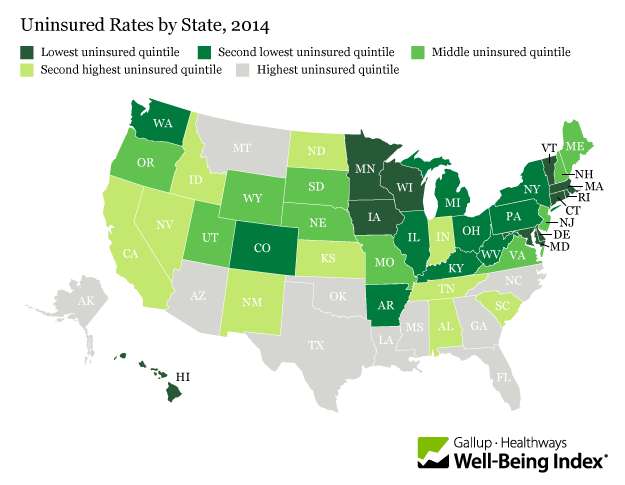
North Carolina went from having just over 20 percent of its citizens uninsured in 2013 to 16 percent last year,  once the Affordable Care Act started offering subsidies to help people afford premiums, Gallup reported Tuesday.

But states that accepted federal money to expand Medicaid for the poorest adults saw bigger gains in coverage, according to the latest report from the Gallup-Healthways Well-Being Index,  which polls a random sampling of adults across the country. The national uninsured rate went from 17.3 percent to 13.8 percent, the lowest in the seven years of the well-being poll.

"Collectively, the uninsured rate in states that have chosen to expand Medicaid and set up their own state exchanges or partnerships in the health insurance marketplace declined significantly more last year than the rate in states that did not take these steps," Gallup reports. "The uninsured rate declined 4.8 points in the 21 states that implemented both of these measures, compared with a 2.7-point drop across the 29 states that have implemented only one or neither of these actions."

North and South Carolina, along with many Republican-led states, neither set up an insurance exchange nor expanded Medicaid. 

As Rose Hoban with N.C. Health News recently reported, bankers and business leaders have been receptive to the argument that expansion would bring financial benefits to the state,  though the state Chamber of Commerce has taken no position. And a coalition of health and anti-poverty advocates argue that expansion would save lives and create jobs. But state legislative leaders remain wary of the costs and complexities of expansion, and Gov. Pat McCrory has said he'll delay any plans to expand coverage until the U.S. Supreme Court rules on a challenge to the ACA.

Managed care groups push N.C. Medicaid reform

A coalition of insurance companies and managed care providers recently launched N.C. Medicaid Choice to lobby for change in the way the state administers the program.

"The Coalition supports legislation that shifts financial risk away from taxpayers by allowing traditional managed care plans, as well as plans offered by health care providers, to compete in the North Carolina Medicaid market," says an announcement posted Feb. 10.

Griffin
Aetna, Amerigroup, AmeriHealth Caritas, UnitedHealth Group and WellCare are the founding members. They've hired Taylor Griffin, a political consultant who ran for Congress in the 2014 GOP primary, as point person for the campaign. Griffin, an Appalachian State alum, worked for Sen. Jesse Helms and President George W. Bush before making his own bid for office (he lost to Walter Jones).

Republican leaders of the state House and Senate have talked about the need to reform Medicaid, which has a history of cost overruns, but haven't agreed on a strategy.  Griffin said Thursday his coalition supports the Medicaid Modernization bill,  which would let groups like the ones he represents compete with accountable care organizations run by doctors or hospital, over the Partnership for a Healthy North Carolina bill that turns Medicaid over to only the provider-led groups. 

Both involve the state paying a per-patient fee to groups that take the responsibility for providing care and controlling costs; they turn profit if they come in under budget or take the loss if they run over.  Both, says Griffin, provide incentives to push the kind of preventive care that not only cuts costs but improves lives -- for instance, prenatal care, timely screenings and healthy lifestyle changes. Allowing the established for-profit firms to compete will lead to bigger savings and a quicker roll-out, Griffin said.

A news analysis that ran in the Observer this week noted that in some Republican circles, "Medicaid reform" has become a euphemism for taking federal "Obamacare" money to expand coverage for low-income adults. Griffin said his group is taking no stand on Medicaid expansion in North Carolina. For them, reform is about fixing with the system that's in place, not making more people eligible.

ACA numbers: What's squishy, what's solid?

Early tallies of 2015 participation in the Affordable Care Act exchange are bound to raise follow-up questions,  not only among those who doubt anything President Obama says but those trying to sort out the nuances of a complex system.

The White House was eager to announce a preliminary estimate of 11.4 million sign-ups nationwide.  That includes totals from the 37 states that use the federal marketplace as well as  "preliminary analyses"  of data from state-run markets.  Federal officials say that number is 10 percent over the White House target, with numbers that jumped significantly in the final week.
White House graphic touting tally

As indicated by the  "preliminary" label,  that tally is bound to change.  Some states that run their own markets have granted extensions to the Feb. 15 deadline because of winter storms or system glitches.  Some who hit snarls in the federal exchange on the final weekend got an extra week to finish enrolling.

The tally includes people who selected plans but won't actually pay the premiums.  Kevin Counihan,  CEO of the federal marketplace,  predicts that about 87 percent of enrollments will translate to actual coverage.  That comes to about 9.9 million people.  Obamacare critic Avik Roy noted that 2014 ACA retention translated to 84 percent,  "fairly similar to (the rate) experienced by private insurers in the conventional ... insurance market."

The feds also released totals for the states using HealthCare.gov and major cities within those markets  (read that report here).  We don't yet have a breakdown of new plans vs. renewals for the states,  though Counihan said about 8.6 million of the 11.4 million nationwide,  or 75 percent,  were renewals.  Nor do we have a final count on how many got subsidies,  though a Feb. 9 report pegged North Carolina's total at 92 percent.

Katherine Restrepo,  health analyst for the John Locke Foundation,  notes that while that percentage may be accurate it can be misleading.  Those at the high end of eligibility (up to $95,400 for a family of four) get small tax credits that do little to lower costs, she says.

Roy contends that the White House tally is "deceptive" because it includes an unknown number of people who already had insurance and switched. It's true that the totals don't distinguish between those who had insurance and those who didn't,  though I'm not convinced that the White House and "friendly media outlets" have claimed otherwise.

Finally,  reader Bryan Griffith correctly called me out for not including any specifics in a recent article citing a surge of last-minute enrollments in Charlotte.  Here's what the latest report shows:  The Charlotte metro area got almost 17,000 sign-ups between Feb. 6 and Feb. 15,  or about 12 percent of the total enrollment logged during the 13-week enrollment period.

Unanimous vote to expand N.C. Medicaid? Well ...

Jeff Jackson,  a Democratic state senator representing Mecklenburg's District 37,  knows how to have fun with a snow day.

This morning he posted on Facebook that "Due to inclement weather,  I appear to be the only non-security person in the General Assembly this morning.  I feel like I should hurry up and pass Medicaid expansion.  Anything else while I've got the place to myself?


His constituents  --  or at least his Facebook friends -- got a kick out of that,  with more than 100 comments and 500 likes by 9:30 a.m.  He got a long list of requests,  from raising teacher pay to banning puppy mills and legalizing marijuana.

Around 8:30 a.m.,  Jackson started tallying his accomplishments:

Just came back from the Senate chamber. All votes were unanimous.
Medicaid = expanded. Teachers = paid. Film = jobs. What's next?
This is going to be like "Night at the Museum" except at the end we'll have a stronger middle class.

Sen. Jeff Tarte, a Mecklenburg Republican, later posted that he and several GOP colleagues were there working as well.   "Classic example of Democrats 'misrepresenting the facts,' "  Tarte sniffed  before tipping his hand with an "LOL" and an invitation for Jackson to join him for dinner.

By that time the #JustOneLegislator winter fantasy had gone viral.  Mutual Facebook friend Laura Hehn had a suggestion  --  "Work together and make some positive changes!"  --  and even offered a couple of new hashtags: #JustTwoLegislators or #JustTheJeffs.

Losing health benefits? Study blames recession

If your employer provides health insurance,  you're probably paying more for less  --  and wondering who's to blame.  The Affordable Care Act has contributed to rising costs by mandating certain types of coverage,  allowing many adult children to stay on parents'  policies and levying a 2018 tax on high-cost  "Cadillac plans."

But the trend toward reducing benefits and dropping health insurance altogether was in full swing before the act kicked in this year, according to a recent analysis by the University of Minnesota’s State Health Access Data Assistance Center and the Robert Wood Johnson Foundation.

Before to the recession, the research shows that employer coverage was fairly stable.  Between 2004-05 and 2008-09,  for instance,  North and South Carolina,  like most of the country,  saw no significant change in the percent of employers offering health insurance.  But the rates dropped from 2008-09,  the start of the recession,  to 2012-13.  In North Carolina it went from 53 percent to 47 percent,  and in South Carolina from 54 percent to 47 percent.  Most of that decline has come from companies with fewer than 50 employees.


That's consistent with what I've heard.  For instance,  I wrote last fall about Charlotte's Blue Max Materials,  a small employer,  dropping health insurance in the face of rising costs.  Meanwhile,  the owner of Stafford Cutting Dies bumped up deductibles dramatically to cope with skyrocketing costs for a small-business policy.


“Most Americans still get health insurance through their jobs, but this has been declining for more than a decade,” said Katherine Hempstead, who directs coverage issues at the foundation. “It will be interesting to see how that trend evolves now that there are more opportunities for coverage through the individual market and Medicaid.”

The report includes detailed breakdowns for each state.


So you got insurance. Will it help?

As the 2015 push for health-insurance enrollment winds down, the next challenge grows ever clearer:  Insured people who can't afford medical care.

The New York Times Sunday Review carried an article titled  "Insured, but Not Covered."  Reporter Elisabeth Rosenthal explores trends in insurance and health care that are leaving people with insurance unable to find doctors or pay bills.

Her conclusion:  While the Affordable Care Act has brought coverage to roughly 10 million Americans and eliminated  "some of the more egregious practices of the American health insurance system that left patients bankrupt or losing homes to pay bills,"  the law has also adopted policies that "may in some ways be undermining its signature promise:  health care that is accessible and affordable for all."

A key culprit is the boom in high-deductible policies,  which allow employers and private buyers to reduce premiums by agreeing to much higher out-of-pocket costs.


For instance,  HealthSherpa recently sent along an analysis of  14,000 North Carolina health insurance purchases made on the company's web site,  which provides an alternative path for buying subsidized plans on the ACA exchange.  Those buyers had an average household income of about $20,400 and bought policies that averaged $70 a month for the buyer,  with the government kicking in an average of $381 a month.

But the average deductible per enrollee was $3,969 and the average out-of-pocket max was $5,745.  Can you imagine anyone making less than $21,000 a year being able to save $4,000 to $6,000 to cover those costs?  Reality is,  even paying a couple of hundred dollars may be daunting enough to discourage people from going to the doctor's office.

A recent report from The Commonwealth Fund showed that the number of people skipping care because of costs declined in 2014,   the first time since the question was added to the fund's health insurance survey in 2003.  But while the numbers fell significantly compared with 2013,  the year before the ACA took effect,  the report estimates that 66 million Americans,  or 36 percent of adults, still skipped an office visit,  test,  treatment or prescription because they couldn't afford it.
ontinue reading the main storyBut by endorsing and expanding the complex new policies promoted by the health care industry, the law may in some ways be undermining its signature promise: health care that is accessible and affordable for all.

Health activist moves from Obama's home to Tar Heel state

One of the best-known health care activists from President Obama's home state has recently moved to North Carolina.

Jim Duffett,  longtime director of the Illinois Campaign for Better Health Care,  relocated to Chapel Hill in August,  drawn by milder winters and job opportunities for his wife,  an oncology nurse.  In Illinois he spent 30 years working for affordable care and patient rights,  eventually building a coalition of 300 groups representing health care,  faith,  labor and various communities.
Duffett

"One fond memory is having had the honor of working with Obama on health care reform in Illinois during Obama's years as a (state) senator,  and now,  'knowing he is the president and still knows you,'  "  Duffett said in an interview with The  (Champaign)  News-Gazette.

Duffett,  a proponent of a single-payer insurance system,  has connected with the NAACP-led Forward Together Moral Movement and is looking for work in advocacy here.  He says he's still getting up to speed on North Carolina's health care scene,  but sees some similarities with his old turf.  Both states have powerful political opposition to Medicaid expansion,  he said,  and Illinois'  2013 approval was hard-fought and narrowly won.  In North Carolina,  he says,  he hopes to build alliances with some of the hospital,  medical and business interests that united with more traditional anti-poverty groups in Illinois.  "There's definitely going to have to be a bit more base-building,"  he said,  though the Moral Monday protests  "are definitely galvanizing folks."


Burr leads push to repeal and replace Obamacare

U.S. Sen. Richard Burr is taking a lead role in the latest push to replace the Affordable Care Act with a more market-driven approach to health reform.  The North Carolina Republican joined two other committee chairs last week in introducing a new version of a prior  "repeal and replace" plan.

Burr
The Patient Choice,  Accountability,  Responsibility and Empowerment Act  (Patient CARE) would repeal the coverage mandate that's part of the ACA and revamp the subsidized marketplace that helps low-income people buy health insurance.  The act,  co-authored by Sen. Orrin Hatch of Utah and Rep. Fred Upton of Michigan,  would use the marketplace to replace Medicaid expansion,  allow interstate insurance purchases and revamp the tax break for employer insurance.

Avik Roy,  author of a leading plan to reform the ACA piece by piece,  offers an in-depth look at how the new Patient CARE Act compares with the prior version and with his own plan.  He's a fan of the Burr-Hatch-Upton bill,  even though he contends his own plan is more practical because it doesn't require repeal of the ACA.

"Both plans would offer better health outcomes for the poor,  by allowing those on Medicaid to obtain tax credits for the purchase of private health insurance and health savings accounts,"  Roy writes.  "Mostly importantly,  both plans would cover more people than Obamacare,  because they would drive down the cost of health insurance for those who can't afford it today."

For a more skeptical take,  read this piece by the Huffington Post's Jeffrey Young and Jonathan Cohn.


"Republicans promote these changes as increasing  'choice'  and  'flexibility'  in insurance,  claiming that they will result in less federal spending and that younger adults will pay lower prices,"  they write.  "But each of these proposed changes would carry other consequences as well.  Policies without full benefits,  including  'junk'  plans and mini-med policies,  would return to the market.  The same pricing practices that reduced premiums for 25-year-olds would jack them up for 60-year-olds,  putting insurance out of reach for many older Americans."

The Brookings Institution also offers a pro and con perspective.  Stuart Butler gives the plan  "two cheers"  as a viable plan for  "addressing the impasse over the ACA and achieving health coverage goals that are widely shared,"  while Henry Aaron says it moves in the wrong direction by creating more holes in the health care system.

Single white Southerners: ACA benefits may await

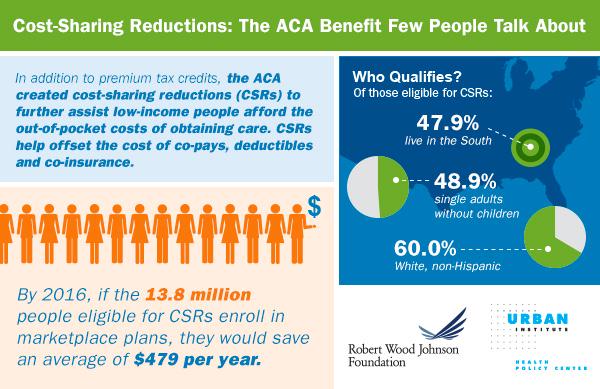
People who are eligible for aid paying out-of-pocket medical costs are most likely to be white, single and living in the South,  according to a new report from the Robert Wood Johnson Foundation and the Urban Institute.

Most people know that the Affordable Care Act provides tax credits  (aka subsidies)  to help low- and moderate-income people buy health insurance.  Less known,  the authors say,  is that people earning up to 200 percent of the federal poverty level  ($29,175 for a single person)  can also get help paying out-of-pocket expenses,  a major concern in an era of high-deductible policies.

"This benefit seems to fall off the radar sometimes,"  said Katherine Hempstead,  director of coverage for the Johnson foundation.  People need to choose a silver plan to qualify for that help, she added.  Those who choose a bronze plan for the lower premiums may end up worse off when they're hit with higher out-of-pocket bills.

The study looks at who is expected to fall into those income ranges in 2016,  though it's obviously timed to remind people about enrollment before the Feb. 15 deadline for 2015 sign-ups.  The authors broke the country into four regions and found that almost half of the eligible people live in the South  (a zone that includes such states as Texas,  Louisiana and Oklahoma,  as well the Southeast).

That's probably because many of those states,  including North and South Carolina,  haven't accepted federal money to expanded Medicaid.  In states that did,  people who fall below 138 percent of poverty qualify for Medicaid.  In non-expansion states,  those between 100 and 138 percent qualify for aid on the exchange.  Many who make less than the poverty level fall into the Medicaid gap and can't afford insurance.

Single people without children accounted for the biggest block by family status  (48.9 percent),  and non-Hispanic white people made up 60 percent of the eligible people.

The study doesn't account for how many people within the income brackets may have other types of  insurance and how many are already be getting the subsidies.

NC Medicaid battle: Hard numbers and human stories

The groups fighting for North Carolina to expand Medicaid this year are taking a two-pronged approach.

In news conferences in Charlotte and Raleigh this week,  the N.C. Medicaid Expansion Coalition urged people to share their stories at NCLeftMeOut.org.  They're looking for personal tales from people like Charlotte's Dana Wilson,  whose multiple sclerosis limits her to working a few hours a week at an antique shop.  Wilson doesn't earn enough to qualify for subsidized health insurance and isn't eligible for Medicaid.

Charlotte news conference

But the coalition,  led by Action NC and Progress NC,  is also taking a more hard-nosed approach, focusing on jobs and tax revenue that would be generated by accepting the federal money to expand Medicaid coverage.

A recent report by George Washington University's Milken Institute School of Public Health,  commissioned by the Cone Health Foundation and the Kate B. Reynolds Charitable Trust,  projects that if state lawmakers were to approve expansion this year,  the decision would generate about 43,000 jobs by 2020.  About half would be in health care,  the report says,  with the rest spread among sectors ranging from construction to retail "as health care workers use new income to pay their mortgages, buy groceries, pay taxes and so on."

"At county levels, if Medicaid is not expanded by 2016, Mecklenburg and Wake Counties would create about 4,500 fewer jobs each by 2020,"  the report says.  "Mecklenburg County’s total economy (gross county product) from 2016 to 2020 would be almost $1 billion lower."


"Lawmakers like to talk about fiscal responsibility,"  Wilson said in Charlotte Thursday.  "It's just common sense."


The Affordable Care Act includes money to expand Medicaid in all states  --  and levies taxes that everyone is paying,  regardless of whether the state accepts the money or not.  A handful of Republican-led states that initially said no have gotten permission to craft their own version of coverage.  Indiana was the most recent in late January,   and N.C. Gov. Pat McCrory has signaled some interest in crafting a North Carolina plan.

"As we review continue to review health care options for the uninsured,  we are exploring North Carolina-based options that will help those who can't help themselves, and encourage those who can,"  McCrory said in Wednesday's State of the State address.  "If we bring a proposal to cover the uninsured, it will protect North Carolina taxpayers. And any plan will require personal and financial responsibility from those who would be covered."


Read more here: http://www.charlotteobserver.com/2015/02/04/5494786/text-of-nc-gov-mccrorys-state.html#storylink=cpy
As the pro-expansion advocates noted,  that's still far from a specific plan.  And there's still little sign that Senate President Pro Tem Phil Berger or newly elected House Speaker Tim Moore are on board for any kind of expanded coverage.

Separated, uninsured and out of luck?

A reader who's in the process of divorce emailed to ask whether there's any way he can get help paying for health insurance this year.

He works part time and says he'd spend half his take-home pay buying a private policy.  His wife makes a lot more,  and the reader says he was told that because they're not divorced,  his household income includes her pay,  which puts him out of range for tax credits on the Affordable Care Act exchange.
Image: wikihow.com
"I was just wondering if I’m screwed until I am officially divorced,"  he said.

I thought I knew the answer  (yes,  but you can apply once the divorce goes through),  but Madison Hardee of Legal Services of Southern Piedmont says it's not that simple.

"Marketplace eligibility for couples who are married but separated is complicated,"  she wrote.  "You are correct that the marketplace asks consumers for their current marital status. However,  at tax filing,  the IRS will consider the marital status on December 31st of the tax year.  For example,  if a consumer is currently married and then gets divorced in July 2015,  the IRS will consider that person unmarried for the entire 2015 tax year."

So if the reader,  who asked that I not share his name,  applies now,  he'll presumably be denied any financial aid based on the combined income.  And if he doesn't enroll in a plan before the Feb. 15 deadline,  he won't automatically be eligible for special enrollment based on the divorce.  But if he enrolls now,  he can go back to HealthCare.gov after the divorce,  report the change in income and select a new plan if he qualifies for subsidies,  Hardee said.

Hardee is a lawyer who has been trained in ACA enrollment,  so she added even more caveats based on special circumstances.

My takeaway:  Anyone like this reader,  who faces crucial decisions about paying for care,  needs to hustle to take advantage of 10 more days of free assistance.  Don't ask your neighbor or your aunt or even a reasonably well-informed reporter.  Sit down with an expert who can review your individual circumstances and talk you through options.

To get free help in North Carolina, call 855-733-3711 or visit www.getcoveredamerica.org/connector. In South Carolina, call 888-998-4646 or visit www.signupsc.com.  Don't dawdle;  I'm hearing that appointments are filling up.

You can also call an insurance broker.  Or do a walk-in at Get Covered Mecklenburg's last-minute enrollment event from 10 a.m. to 4 p.m. Feb. 14 at the Children and Family Services Center, 601 E. Fourth St.

Just don't kick yourself on Feb. 16 for procrastinating.

Read more here: http://www.charlotteobserver.com/2015/01/23/5466303/obamacare-enrollment-grows-in.html#.VNKaf2jF_GE#storylink=cpy


Can GOP reform Obamacare?

As the Republican-led Congress begins its 2015  "repeal the Affordable Care Act"  season,  this seems like a good time to loop back to Philip Klein's examination of GOP alternatives for health care.

Tuesday's vote on H.R. 596 is part of an ongoing political drama that has already featured more than 50 house votes to repeal the ACA.  But in "Overcoming Obamacare,"  conservative health writer Klein delves into three long-term conservative strategies to reshape a broken system.

Roy
Avik Roy of the Manhattan Institute,  a former adviser to the Mitt Romney presidential campaign,  is a leading voice in what Klein dubs the reform camp.  Roy's plan preserves some elements of the ACA,  including the insurance exchange and protections for people with pre-existing conditions.

"Roy's philosophical starting point on the health care issue differs from that of many conservatives in that he has argued in favor of universal coverage, calling it  'a morally worthy goal.'  His plan is also based on the assumption that repeal is unlikely,"  Klein writes.

Roy's reform plan outlines changes that can be made piece by piece,  such as eliminating many of the ACA taxes,  allowing insurers to charge higher rates for older customers and extending private-insurance exchanges to Medicaid and Medicare.  He touts it as a politically feasible strategy that would make insurance cheaper and more appealing for young people while costing taxpayers less than the ACA.

Klein predicts that it's more likely to alienate members of both parties,  with Democrats resisting the changes while Republicans  "would be expected to embrace the goal of universal coverage" and  "cede major ground to Obamacare on taxes,  spending and regulations."

Coming soon:  A look at the "replace"  and  "restart"  strategies.

My surgeon made how much?

If you look up arthroscopic knee surgery on the new Blue Cross cost estimator,  you'll see that several Charlotte surgeons were reimbursed about $4,000 for doing the procedure at Charlotte Surgery Center and about $10,000 for doing it in area hospitals.

But what you take from that depends on your perspective.

Murrey
Dr. Dan Murrey,  CEO of OrthoCarolina,  says it's an accurate representation of the savings many patients can find by avoiding a hospital for routine surgery.  Now that so many patients are picking up thousands of dollars out of pocket,  he hopes they'll start asking questions to ensure they don't pay extra.

But he's appalled at the idea that patients will think their doctors tacked on an extra $5,000 or $6,000 at the hospitals.  Even though the Blue Cross listings are attached to surgeon's names,  the average reimbursement represents all costs of a procedure, such as medications, anesthesia and hospital fees.  All things being equal,  he said, the surgeon makes the same amount at either setting  --  and it's lower than the $4,000 being reimbursed at the ambulatory surgical center.

Executives at Carolinas HealthCare System and Novant Health agree it's good for patients to know that a hospital may be more costly for a routine procedure. But if you're coming in with risk factors, such as heart trouble or a history of problems with anesthesia,  that routine procedure could quickly turn scary.  In those cases the hospital's resources are essential. They say hospitals and doctors that are averaging bigger reimbursements from Blue Cross may just be those that are taking on a bigger load of high-risk patients whose procedures are more complicated.

Leslie Goldfarb,  who has been looking into arthroscopic knee surgery,  says the average reimbursements listed in that public database provide better information than Blue Cross customers like her can get from the customer-only cost tool.  That's not a compliment to her insurance company.  She wonders why Blue Cross doesn't provide a better service to its customers,  instead of focusing on national attention-getting moves like the public release.

"The cost estimator on their member website is vague, incomplete and very, very slow!" she emailed. "The tool that you have published is fast as lightning, lists many more providers and is much easier to use."

Blue Cross NC public relations manager Michelle Douglas says the personalized estimates generated by the member search are more complex than the averages listed on the public tool, and thus take longer even under ideal circumstances.  "It is true that the customer tool is not running as quickly as we like right now, and we are working with our external vendor to understand why,"  Douglas said Tuesday.  But she said that tool still provides more and better information for a personal decision than the public list.

Shortly after Blue Cross and Blue Shield of North Carolina released its public database,  Blue Cross put out a national report on costs for hip and knee replacement,  highlighting the wide variation in cities such as Charlotte.


"In order to address healthcare costs and access, it is important that consumers, employers and industry leaders have information on these price variations and are provided the tools to become well informed healthcare shoppers,"  that report says.  It says this is the first report in a series  "that will utilize a market-leading medical claims database to uncover key trends and provide insight into healthcare dynamics."


Author: GOP needs strategy beyond anti-Obamacare

I know a lot of Republicans want to repeal the Affordable Care Act,  but I've had a hard time figuring out what,  if anything,  they want to take its place.  That's unfortunate,  given the power they hold in North Carolina and in Congress.

Klein
Philip Klein,  commentary editor for the conservative Washington Examiner,  agrees.  "If opponents of the law want to win the war over the future of the nation's medical system,  they will have to unite around an alternative approach,"  he writes in  "Overcoming Obamacare:  Three Approaches to Reversing the Government Takeover of Health Care."

Klein argues that there's not really a dearth of GOP alternatives.  Instead,  he says,  there are too many  --  and all of them tend to get drowned out in general discourse by the  "repeal"  rhetoric.

Health reform has never been a favorite GOP issue,  except for opposing expansion of government's role,  Klein writes.  You can fire up a conservative crowd by talking about tax cuts,  gun rights,  immigration or the war on terror,  he says,  but don't expect to get cheers for talking about tax treatment of health insurance.

"When Republicans utter phrases such as  'repeal and replace,'  what conservatives often hear is  'Obamacare Lite.'  As a result,  the prevailing question on the right often becomes,  'Why can't we just repeal the law and be done with the health care issue?'  The answer is that even if simple repeal were politically obtainable,  Americans would still be left with a broken health care system."

Klein groups the alternatives into three camps:  Reform,  replace and restart.  I'll loop back to these options.  For now, I'll settle for noting that Klein,  like many of other political perspectives,  believes more and better information about the cost of health care is essential.  "Give consumers the motivation they need to save money and the information they need to do so,  and suppliers of goods and services will respond by providing better value,"  he writes.  "For the most part,  neither feature exists in the American health care system."

Cool or creepy, iPhone tracks my every step

I was psyched to see that my new iPhone 6 came with the Health app.  But I was shocked when I opened it and saw that it was already tracking my steps,  my daily walking distance and the flights of stairs I had climbed.

What?  I didn't ask my phone to do that.  Not only did I not opt in,  I couldn't find a way to opt out.

My first reaction was  "How dare Apple tag me like a game warden tracking a bear?"  I wondered where all this data was going.  The Apple folks say it's stored only on my phone,  but after the disclosure that HealthCare.gov shared personal details after promising not to,  I had to wonder.  I learned that short of ditching my new phone I can't block the monitoring,  though I can tell my phone not to put the information on my dashboard.

I haven't done that.  In fact,  my next thought was "How do I get credit for all the steps I take when my phone is sitting in my purse?  Should I buy more pants with pockets?"

I'm sure I'm not the only one who views the explosion of physical data tracking with a mix of trepidation and fascination.  I grew up reading  "1984"  when it was actually set in the future.  I recently watched the excellent "Black Mirror" Netflix series,  which is enough to give anyone the shivers about where our technology is taking us.  Part of me wants to tell my phone to mind its own business.

But I'm as fascinated by numbers and competition as the next American.   I remember reading David Sedaris' New Yorker essay on  "Living the Fitbit life"  and suspecting that if I ever succumbed,  I'd be like him: "To people like Dawn and me,  people who are obsessive to begin with, the Fitbit is a digital trainer,  perpetually egging us on.  During the first few weeks that I had it,  I’d return to my hotel at the end of the day,  and when I discovered that I’d taken a total of,  say,  twelve thousand steps,  I’d go out for another three thousand."

I resisted when my brother bought a Garmin Vivofit and lost more than 30 pounds.  I poked fun at colleague Andrew Dunn when he got a device for Christmas and put out a query for Fitbit friends to share data with.

But now that this stuff is on my phone,  I've found myself testing whether the technology can tell whether I'm striding up the Observer's escalators or riding passively  (it can).  When I walked to the WFAE studio to talk about health care costs on Wednesday,  I was secretly pleased that my phone was logging those blocks.

So now I'm at 5,770 steps for the day,  with 11 flights of stairs.

It's a personal best in my short career as an iPhone 6 owner.  But it's well below my brother's rate,  not to mention David Sedaris'.

Dang it.

Healthy, wealthy and worried

Even people with health insurance who call themselves financially secure worry that they can't cover their out-of-pocket costs if a medical emergency strikes, a new survey from eHealth shows.

Two-thirds of 1,000 insured adults polled by Wakefield Research described themselves as financially secure,  yet half of that group said they would struggle to meet their deductible in case of an expensive crisis. The trend was even more pronounced among adults ages 25 to 39,  who described themselves as wealthier,  healthier and more optimistic about their finances than older counterparts. But 69 percent of the young adults doubted they could afford their deductibles.  Confidence about out-of-pocket costs was highest among those 55 and older.

Out-of-pocket costs are rising as employers and people who buy their own insurance try to rein in premiums.  eHealth's price index shows what many others have reported:  People are trending toward plans with higher deductibles this year.

eHealth, an online insurance exchange,  launched its Coverage Satisfaction Index to track consumer opinions about coverage,  health and finances  (read an overview of the December poll here).  The sampling was designed to be representative of the nation,  though the South accounted for 37 percent of those polled  (compared with 20 to 22 percent for the other three zones).  About 35 percent reported income of  at least $75,000,  with the rest evenly divided between those in the $35,000 to $74,999 bracket and those earning less.

Some of the results:

*Eighty-six percent described themselves as at least somewhat satisfied with the value of their current health plan,  with 40 percent saying they are very satisfied.  The poll found no difference among those who bought their own coverage and those who got it from an employer,  but those with such government-funded plans as Medicare,  Medicaid and military insurance topped 90 percent satisfaction.

*One-third of men and 38 percent of women said they've skipped medical procedures,  such as exams and immunizations,  to save money.

*Opinions are split on the impact of the Affordable Care Act on their health benefits,  with 32 percent saying it's positive,  28 percent negative and 40 percent saying there's no effect.  Those under age 40 were most supportive of the ACA,  with 45 percent citing a positive impact.

*When asked to name their top three financial fears,  "an expensive medical emergency"  topped the list  --  though that may be no surprise,  coming after a long list of questions about the costs of care.  Asked whether they spent more time thinking about the cost of their health insurance or their cable package,  63 percent said insurance and 37 percent said cable.

Coverage push tailored to LGBT community

A national coalition working to get lesbian,  gay,  bisexual and transgendered people health coverage under the Affordable Care Act has been working with North Carolina advocates to spread the word.

Out2Enroll,  a national initiative pushing enrollment in the LGBT community,  spent last week working with North Carolinians who are doing ACA sign-ups to make sure the message is spread in ways that include people who have often been shut out,  said Katie Keith, an Out2Enroll leader who did training in Charlotte,  Raleigh,  Greensboro and Asheville.

Many may be wary because they've faced insurance discrimination in the past,  said Keith,  whose Trimpa Group progressive consulting firm has long been active in sexual orientation issues.  The ACA,  often dubbed Obamacare,  explicitly bans discrimination based on sexual orientation or gender identity.  It also specifies that people changing gender can't be denied coverage by defining it as a pre-existing condition,  she said, though people still need to carefully check individual policies to see how such transgender issues as hormone therapy and counseling are covered.

"Folks don't think of health care as an equality issue,  but in many ways it is,"  Keith said.

Out2Enroll was created by Trimpa,  the Center for American Progress and the Sellers Dorsey Foundation.  Its web site offers consumer guidance on such issues as whether same-sex couples can apply for family coverage on the ACA exchange  (yes if they're legally married,  no if they're in a different type of partnership).  There's also a look-up to help LGBT people find enrollment help from groups that have gone through cultural competency training.  So far none of the Charlotte groups has the rainbow logo that indicates that endorsement,  but Keith says that's changing.  She met with local enrollment workers and spoke to some LGBT-welcoming churches during the North Carolina tour.

Research by the Center for American Progress,  a Washington-based progressive advocacy group,  shows the first year of the ACA has reduced the percentage of low- and moderate-income LGBT people who are uninsured.  In 2013 the group found that just over one-third of people with incomes at or below 400 percent of the federal poverty level  (the cutoff for getting federal subsidies)  were uninsured.  In 2014 that had dropped to 26 percent.
arts, entertainment, business, computer, technology, game, home, home design, cosplay, forex, forex news, house, real estate, relationships, travel, leisure, automotive, car, health, home improvement, news, society, food, drinking, insurance, animal, education arts, entertainment, business, computer, technology, game, home, home design, cosplay, forex, forex news, house, real estate, relationships, travel, leisure, automotive, car, health, home improvement, news, society, food, drinking, insurance, animal, education